We Do Data.
From the infinitesimally small to the unimaginably vast, we turn numbers into know-how.
Every night, the Vera C. Rubin Observatory will produce 20 terabytes of raw image data. And every day, the data will be processed in near-real-time, tracking unexpected events unfolding in the universe and creating a 500-petabyte archive for research.
And that’s just one example of the advanced data analytics that have put us at the forefront of data-intensive research. From resource allocation services to database administration for large installations, we provide a number of essential services that enable discovery and expand scientific knowledge. Using traditional machine learning, deep learning, and software engineering expertise, we assist Industry Partner Program clients in making data-driven decisions. And, as part of the C3.ai Digital Transformation Institute, we help scientists navigate the intersection of AI, machine learning, cloud computing, the internet of things, big data analytics, organizational behavior, public policy and ethics.
NCSA’s Data Analytics team works with researchers and scientists to help analyze their large datasets to make the most effective use of the resources we provide. Here’s a small sampling of the types of projects we can support:
Bioimaging Analysis
We specialize in working with biological and biomedical images, applying deep learning and software engineering techniques into problem-solving.
Spatial Data Science
NCSA has a long history of applying machine-learning and deep-learning techniques into remote sensing and satellite image data for classification, mapping and change detection purposes of the natural environment.
Machine Learning Software Development
We design and implement software libraries and apply them to simplify frequently encountered machine-learning problems.
HPC and Artificial Intelligence
We are involved in the operation, support and training of NCSA’s high-performance computing systems, such as HOLL-I and HAL, and leveraging them into artificial intelligence applications. We won second place in a prestigious AI competition on critical mineral assessment, co-sponsored by DARPA and the U.S. Geological Survey.
Data Analytics Consulting
NCSA works with faculty, students and industrial partners on research and industrial consulting projects providing data-related solutions such as data processing, analysis, visualization, HPC performance tuning and cloud computing.
Questions about NCSA’s data analytics expertise and services?
Xiaoxia Liao
Technical Program Manager xialiao@illinois.edu
217-244-7174
NCSA Spotlight

Matthew Krafczyk
Research Scientist
Matt leverages experience in computational physics and machine learning to bring research closer to real-world application.
“Deep learning and computational physics have driven some of the most important technological advances of the past decade. Working in these domains provides interesting challenges on a daily basis!”

Keras Spatial
This python package for pre-processing and augmenting geospatial data for Tensorflow deep learning models is just one example of how we help make managing data easier.

Phillips 66
Using data mining, data engineering, and machine learning, the team has helped Phillips 66 explore time series and geospatial data and more.
Project Highlights

DeltaAI
Funded by the U.S. National Science Foundation, DeltaAI has been designed from the ground up to maximize the output of Artificial Intelligence and Machine Learning (AI/ML) research.

Delta
Delta offers a balanced mixture of CPU and GPU nodes and is the most performant GPU computing resource in the National Science Foundation’s portfolio.

Nightingale
A HIPAA-compliant secure system capable of data storage and powerful computation. Nightingale offers a new way to manage complex requirements surrounding sensitive data, taking the burden off the user so they can focus on their research.
News

Modeling Rapid Intensification of a Tropical Cyclone with GPUs
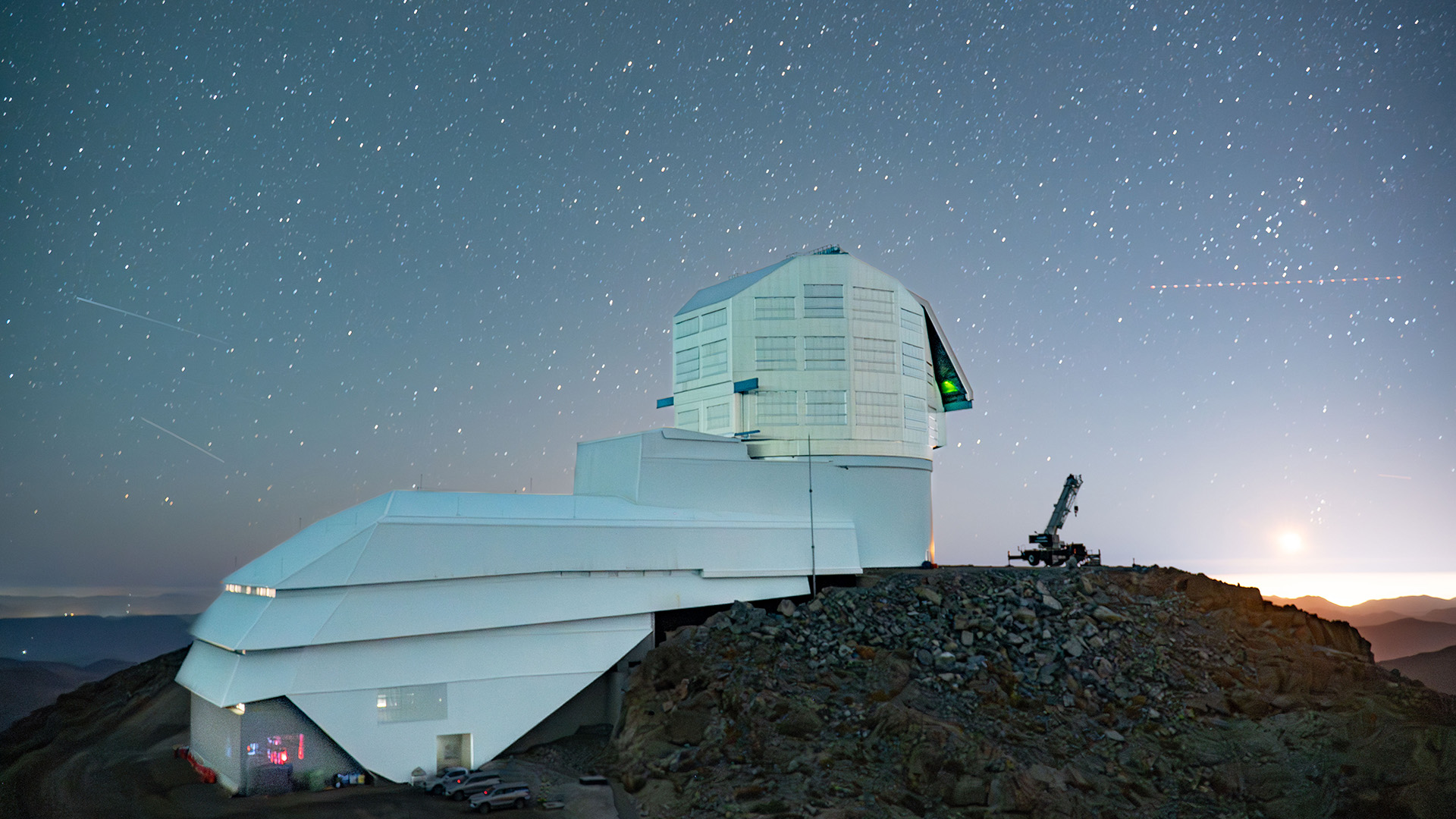
CAPS, NCSA Celebrate Beginning of LSST Project
Mapping Tumors for Better Treatment
New Frontiers in Precision Medicine
Help Desk is available from 7 a.m. to 11:30 p.m., seven days a week, 365 days a year.