A History of Making History.
Since 1986, we’ve been at the epicenter of supercomputing research, pioneering innovations in technology and using them to solve the pressing questions of the day. From the first popular graphic Web browser to ground-breaking research in medicine and astrophysics, we don’t just push the envelope, at NCSA we give it our own unique stamp, taking Illinois innovation into the forefront of research around the world.
Questions about NCSA’s history?
Contact NCSA Communications
ncsa-communications@illinois.edu
April 2022
National Science Foundation Awarded More Than $20M to NCSA for ACCESS Program
The National Science Foundation made two awards to NCSA as part of its Advanced Cyberinfrastructure Coordination Ecosystem: Services and Support program (ACCESS). ACCESS is the follow-on program to the NSF’s Extreme Science and Engineering Discovery Environment (XSEDE), which NCSA led for 11 years.
July 31, 2021
NCSA Chief Scholar Donna Cox Retires
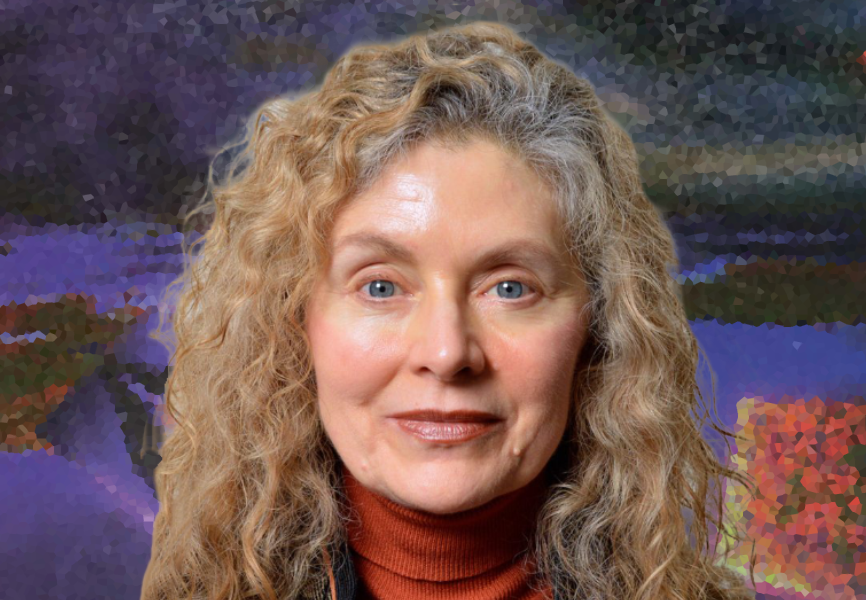
Icon. Pioneer. Trailblazer. Mentor. These are some of the superlatives used to describe Chief Scholar and professor Donna J. Cox and her impact on art, science, technology, and society over the last four decades at the National Center for Supercomputing Applications and University of Illinois Urbana-Champaign.
Read more about her life and legacy.
June 7, 2021
Dark Energy Survey Releases Most Precise Look at the Universe’s Evolution
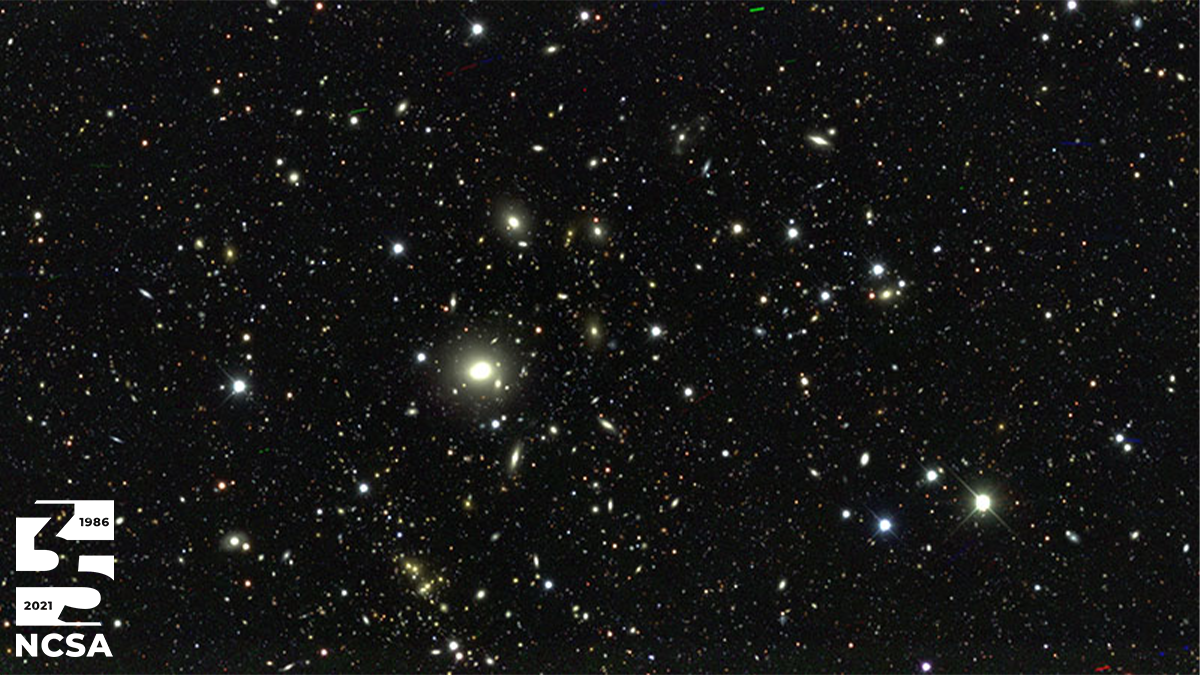
New results from the Dark Energy Survey use the largest-ever sample of galaxies over an enormous piece of the sky to produce the most precise measurements of the universe’s composition and growth to date. Over the course of six years, DES surveyed 5,000 square degrees – almost one-eighth of the entire sky – in 758 nights of observation, cataloging hundreds of millions of objects.
March 26, 2020

NCSA Joins Nationwide Collaboration to Combat COVID-19
The National Center for Supercomputing Applications and the University of Illinois Urbana-Champaign are joining C3.ai, Microsoft Corporation, and research institutions across the country as part of the C3.ai Digital Transformation Institute. The announcement of this institute was made in The New York Times.
This new institute, a multi-disciplinary effort focused on artificial intelligence and advanced computing, will initially accept proposals related to the abatement of COVID-19, and mitigating risks from future pandemics using AI.
August 2, 2019
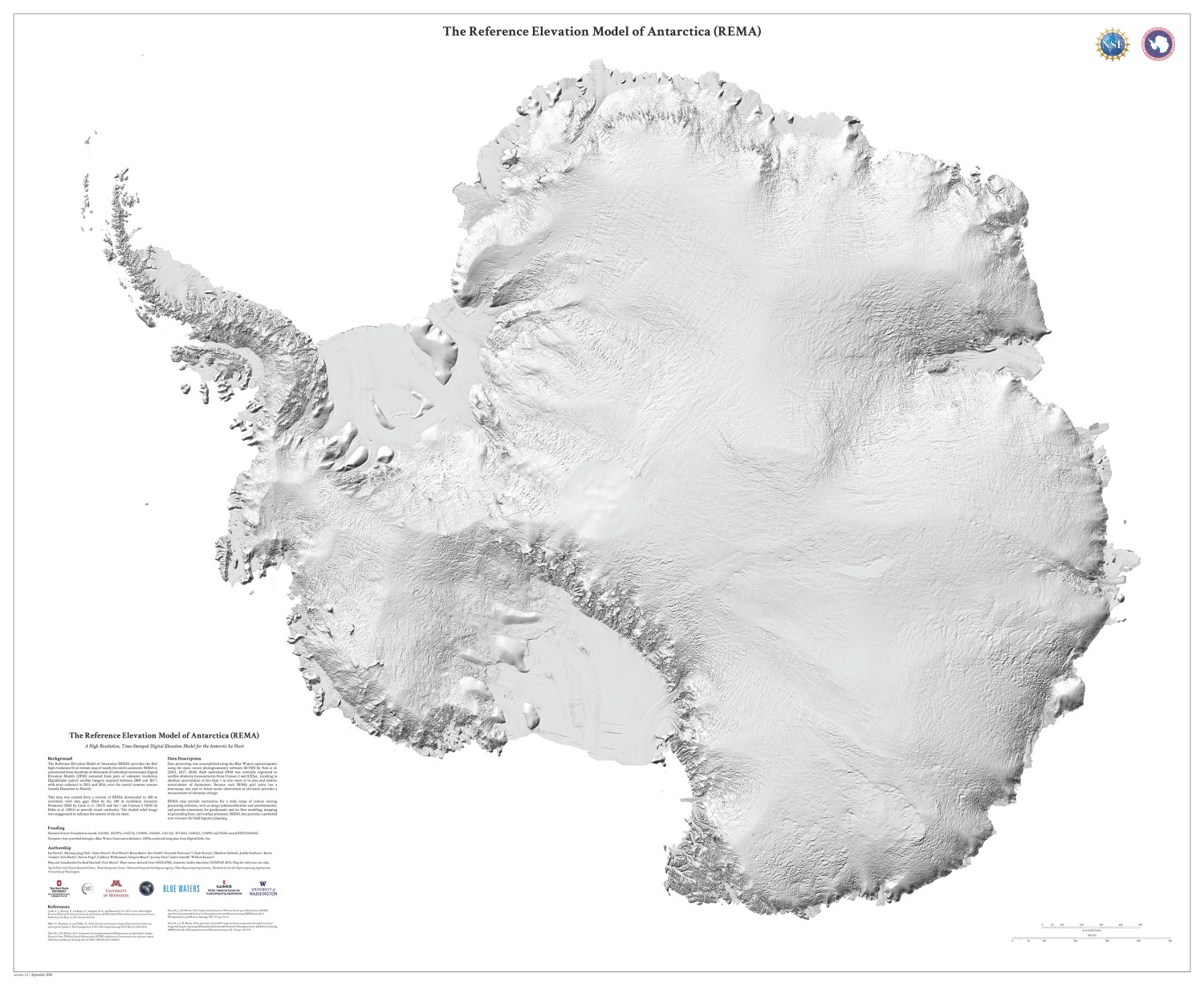
NCSA Collaborates with NGA to Create the World’s Most Powerful Geospatial System
NCSA announced a new collaboration between the Blue Waters Project, the National Geospatial-Intelligence Agency, the University of Minnesota and The Ohio State University to produce digital elevation models (DEM) of the entire Earth, among other geospatial research projects.
The collaboration makes Blue Waters the most powerful dedicated, non-classified geospatial system in the world.
Read more about the collaboration here.
February 11, 2016

Gravitational Waves Discovered
Scientists observed ripples in the fabric of spacetime called gravitational waves, arriving at the earth from a cataclysmic event. This confirmed a major prediction of Albert Einstein’s 1915 general theory of relativity.
Gravitational waves carry information about their origins and about the nature of gravity. Physicists have concluded that the detected gravitational waves were produced during the final moments of the merger of two black holes.
Read more about the discovery here.
January 1, 2013
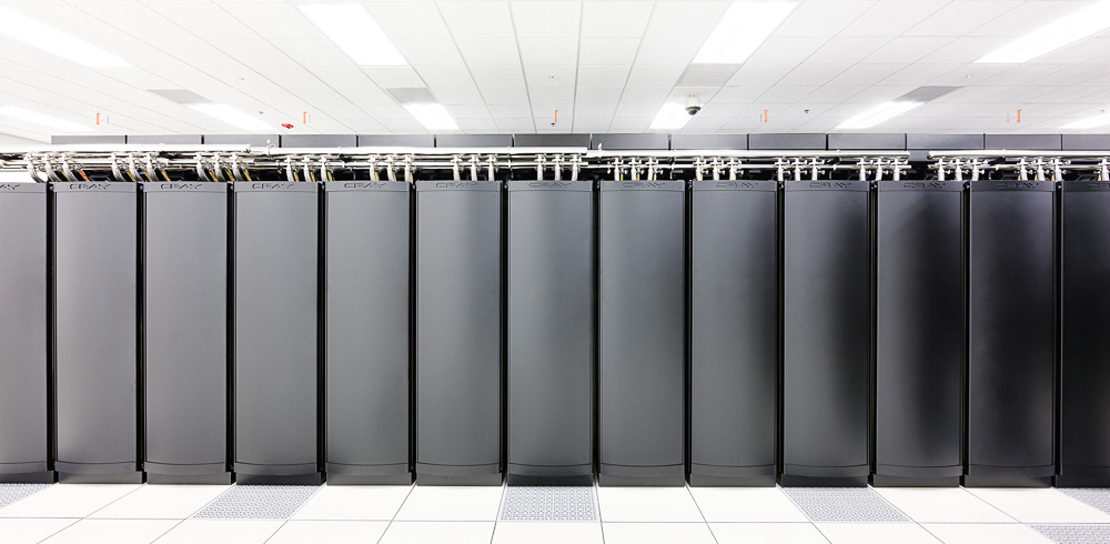
Blue Waters Opens for Science
Blue Waters is one of the most powerful supercomputers in the world and is one of the fastest supercomputers on a university campus. Scientists and engineers across the country use the computing and data power of Blue Waters to tackle a wide range of challenging problems, from predicting the behavior of complex biological systems to simulating the evolution of the cosmos.
Read more about Blue Waters and the research it enables here.
January 1, 2011
XSEDE Created
The Extreme Science and Engineering Discovery Environment (XSEDE) is a powerful collection of integrated digital resources and services—things like supercomputers, visualization and storage systems, collections of data, software, networks, and expert support—that scientists, engineers, social scientists, and humanities experts around the world use to advance understanding of our world and to make our lives healthier, safer, and better. XSEDE integrates these resources and services, makes them easier to use, and helps more people use them. The five-year, $121 million project is supported by the National Science Foundation and led by NCSA.
March 17, 2010
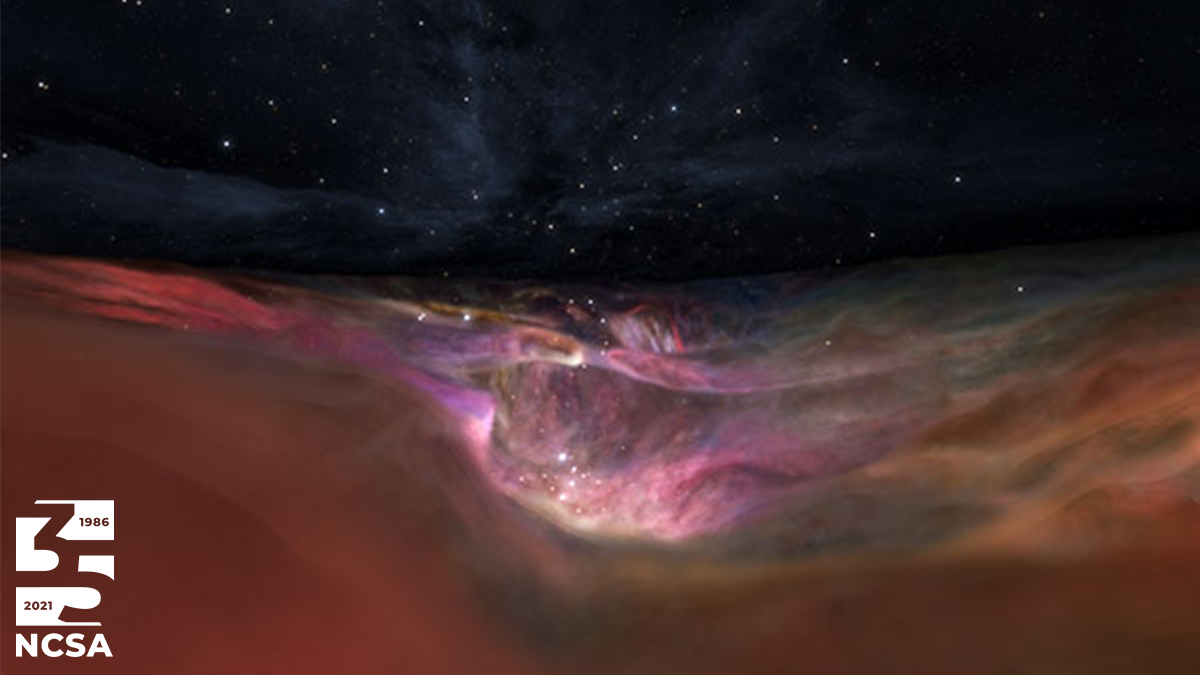
“Hubble 3D” Includes NCSA Visualizations
“Hubble 3D” takes viewers through distant galaxies as it tells the story of the repair and upgrade of the Hubble telescope. While most of the film is shot with IMAX 3D cameras, including live-action footage from the space shuttle, nearly a quarter of the movie’s run time is devoted to NCSA Advanced Visualization Lab’s two dramatic voyages. Comprising nearly 10 minutes of the 43-minute film, the sequences use real Hubble, astronomical, and computational data in visualizations that make audiences feel they are on a space journey.
NCSA’s Advanced Visualization Laboratory used their dedicated visualization cluster and the center’s Abe supercomputer to develop and render the two scenes for the Hubble 3D project. The AVL cluster and the Abe supercomputer both use 64-bit Linux machines, with each machine having eight cores and 16 gigabytes of memory, comparable to a high-end PC or Mac such as a graphics designer might use.
Read more about how AVL achieved this here.
March 10, 2006
NCSA Researcher Simulates Entire Life Form
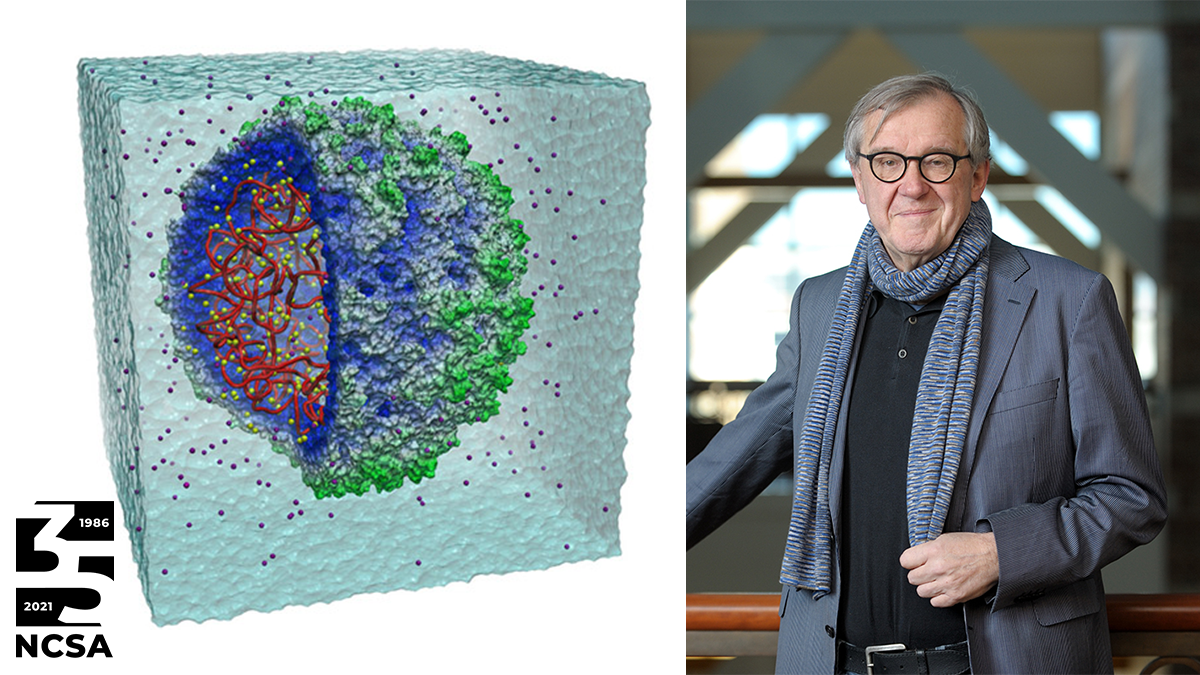
It’s a simple little virus—so simple that biologists often refer to it as a “particle” rather than an organism, so small and primitive that it can only proliferate in a cell that’s already been hijacked by another virus. But a recent simulation of the satellite tobacco mosaic virus is also a striking first. There’s never been a computer simulation of an entire life form in atomic detail. Until now.
November 8, 2004
NOVA’s ‘Hunt For The Supertwister’ Airs
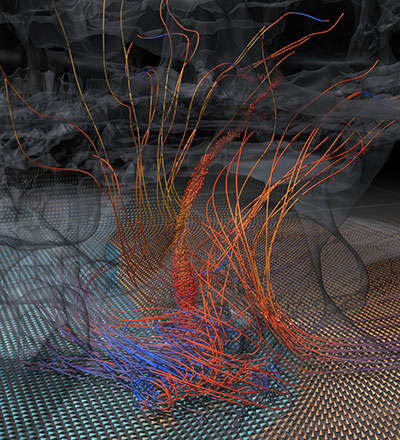
The TV series ‘NOVA’ focused on the search for understanding nature’s most violent tornadoes, from daredevil storm chasing in tornado alley to simulating severe weather with the computational resources and visualization expertise of NCSA at the University of Illinois Urbana-Champaign.
“Hunt for the Supertwister” was aired nationally on PBS stations across the country. The show featured data-driven tornado visualizations produced by NCSA’s Experimental Technologies Division.
May 27, 2003
NCSA Creates Sony PlayStation2 Cluster
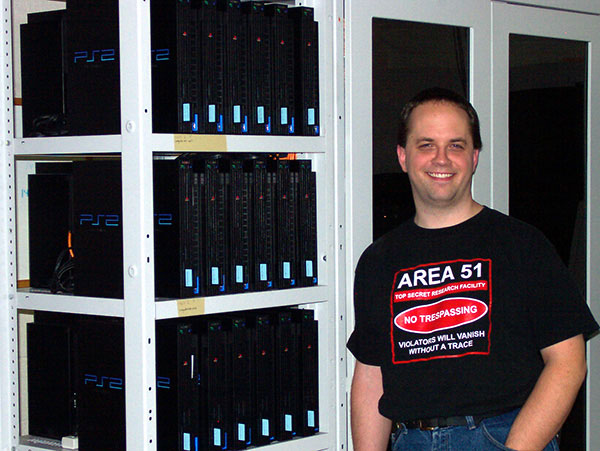
When Sony released the Linux Kit for the PlayStation® 2 (PS2) game console, interest in the machines spread beyond the gaming community to a seemingly unlikely place: the National Center for Supercomputing Applications.
Researchers at NCSA theorized that because of the unique processor of the PS2, a cluster of consoles could potentially be used for scientific computation.
August 9, 2001
NSF Creates TeraGrid
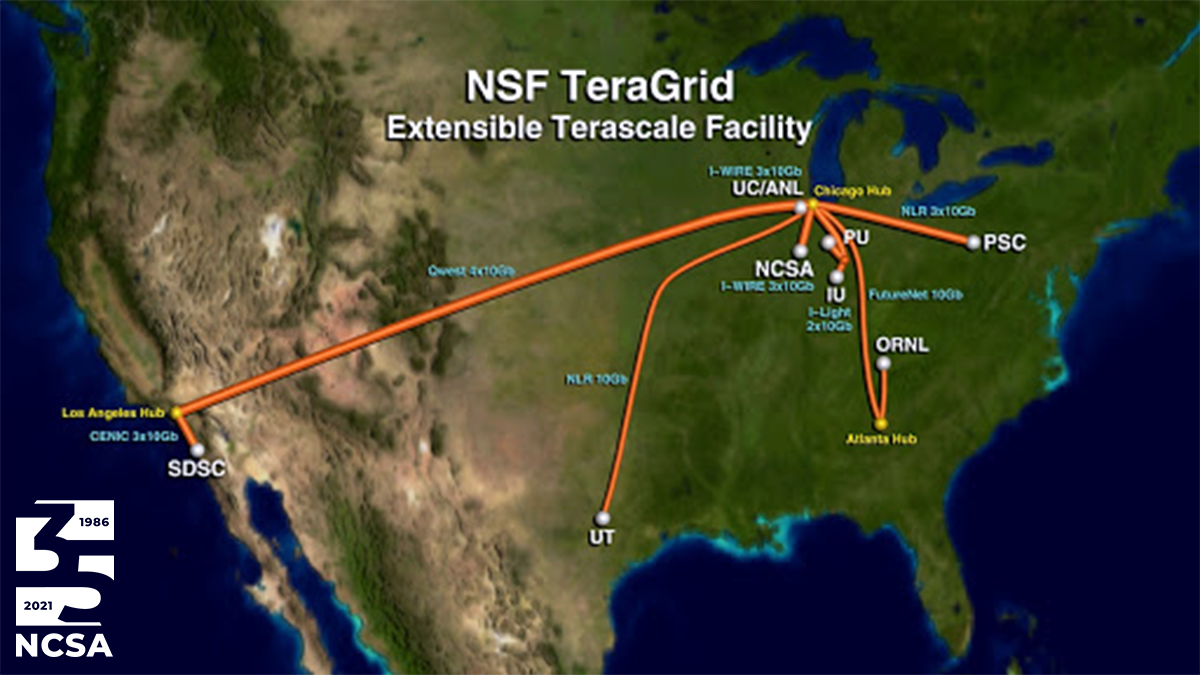
The National Science Foundation has awarded $53 million to four U.S. research institutions to build and deploy a distributed terascale facility. The DTF will be the largest, most comprehensive infrastructure ever deployed for scientific research—with more than 13.6 teraflops (trillions of calculations per second) of computing power as well as facilities capable of managing and storing more than 450 terabytes (trillions of bytes) of data.
Read more about TeraGrid here.
August 31, 1999
NCSA Hits One Million CPU Hours in a Month
Marked the first time usage of a National Science Foundation high-performance computer topped one million normalized CPU hours in one month. According to figures from Quantum Research, which measures computer usage at NSF-support sites, NCSA’s 1,536-processor SGI Origin2000 supercomputer provided 1,136,676 normalized CPU hours to 736 national users in August, tripling the usage from August 1998. A normalized CPU hour is equivalent to a Cray X-MP processor hour, based on standard benchmarks.
November 2, 1998
Newsweek Features NCSA
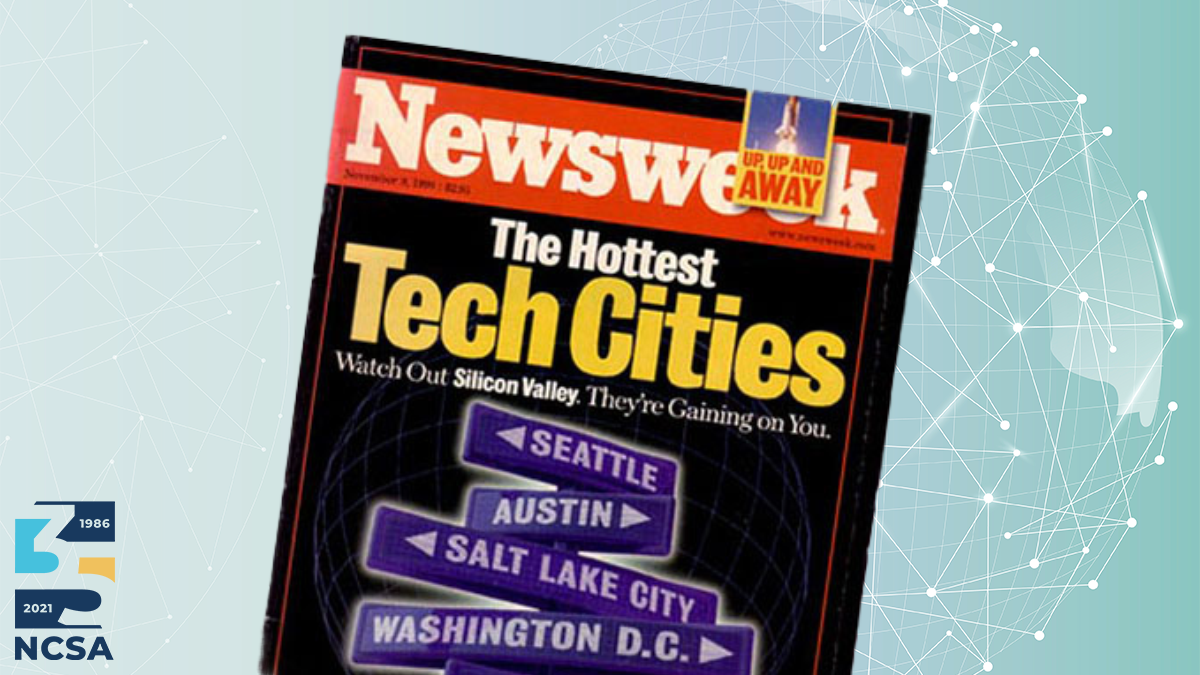
At the height of the tech surge that marked the late 1998, Newsweek asked: “Can any place ever hope to match the awesome success of Silicon Valley?” It then proceeded to answer its own question by rattling off 10 metro areas that might someday fit the bill. Champaign-Urbana—thanks in no small part to NCSA, which was featured in the article—made the cut.
January 3, 1993

NCSA Mosaic is Released
People had created Web browsers before. Prior to anyone at NCSA putting down a line of code, researchers in Palo Alto and Berkeley and Helsinki were circulating their own versions of browsers, frequently with melodious names like Viola and Cello.
NCSA Mosaic broke out in a way that no previous browser had even begun to. It stood on the shoulders of giant ideas and became a giant in its own right.
More about the Mosaic Web Browser
January 10, 1992
Eli Lilly Develops Asthma Drug
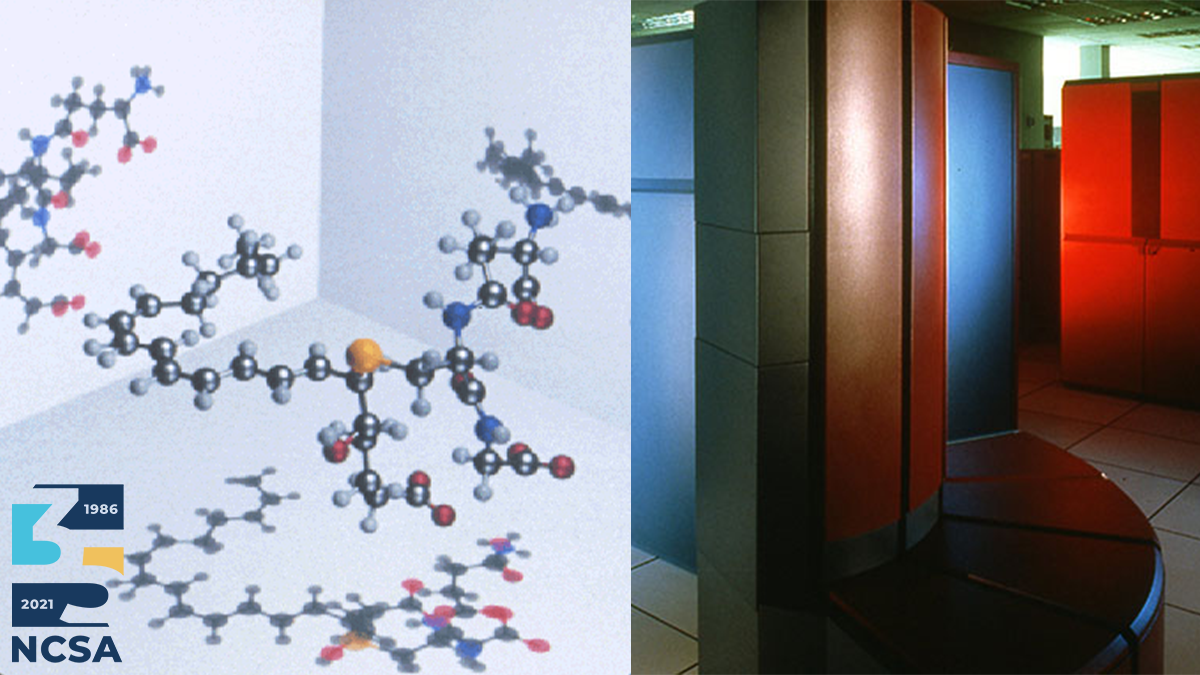
David Herron of Eli Lilly and Company harnessed high-performance computing to aid the fight against asthma from the moment the company joined NCSA’s Industrial Program, now the Private Sector Program, in 1987. Herron and the Lilly research team studied a class of small molecules known as leukotrienes, which cause the lungs to stiffen and become irritated. Lilly’s goal was to develop receptor antagonists that recognize receptors in the lungs, bind to them, and block the leukotrienes. In other words, they wanted to build something that looked enough like the leukotrienes that a receptor accepts it but different enough that it doesn’t trigger a reaction.
January 15, 1991
3D Volumetric Rendering of Mummy
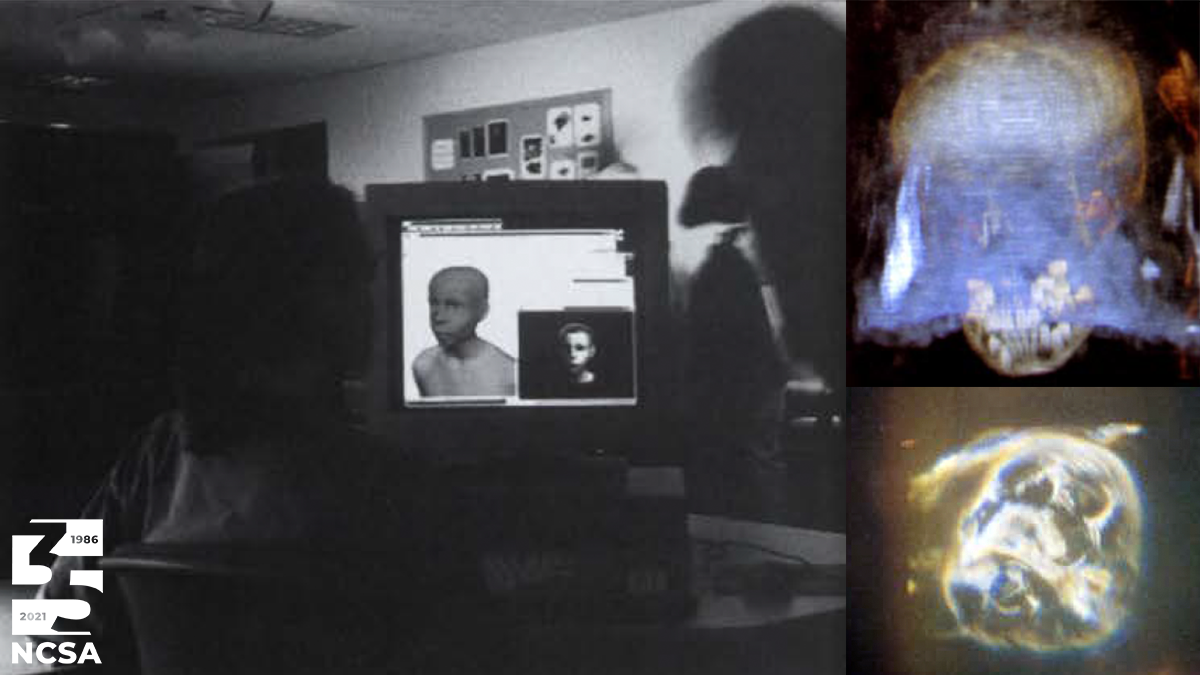
Mummies don’t make their way to Central Illinois that often; when one does, you hate to destroy it while unraveling its secrets. The University of Illinois’ World Heritage Museum received a donated Egyptian mummy in 1989. An interdisciplinary team, including NCSA, then worked to better understand the mummification process and to determine the mummy’s age, sex, medical history, and cause of death.
July 15, 1989
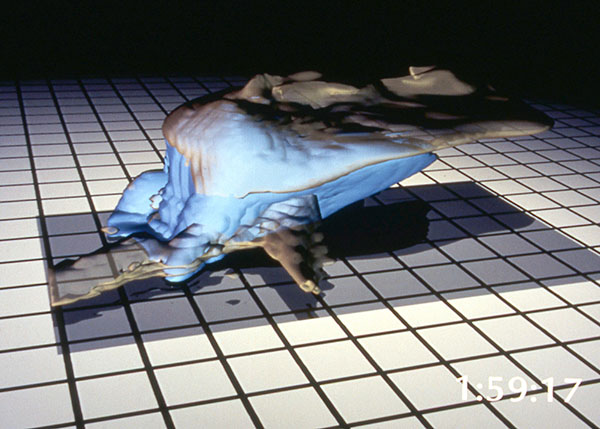
Thunderstorm Visualization Debuts at SIGGRAPH
A thunderstorm visualization from NCSA’s Matthew Arrott and Bob Wilhelmson made its debut at the annual SIGGRAPH Conference, showing the possibilities of data-driven visualization with the power of supercomputing.
Read more about the visualization here.
January 16, 1986
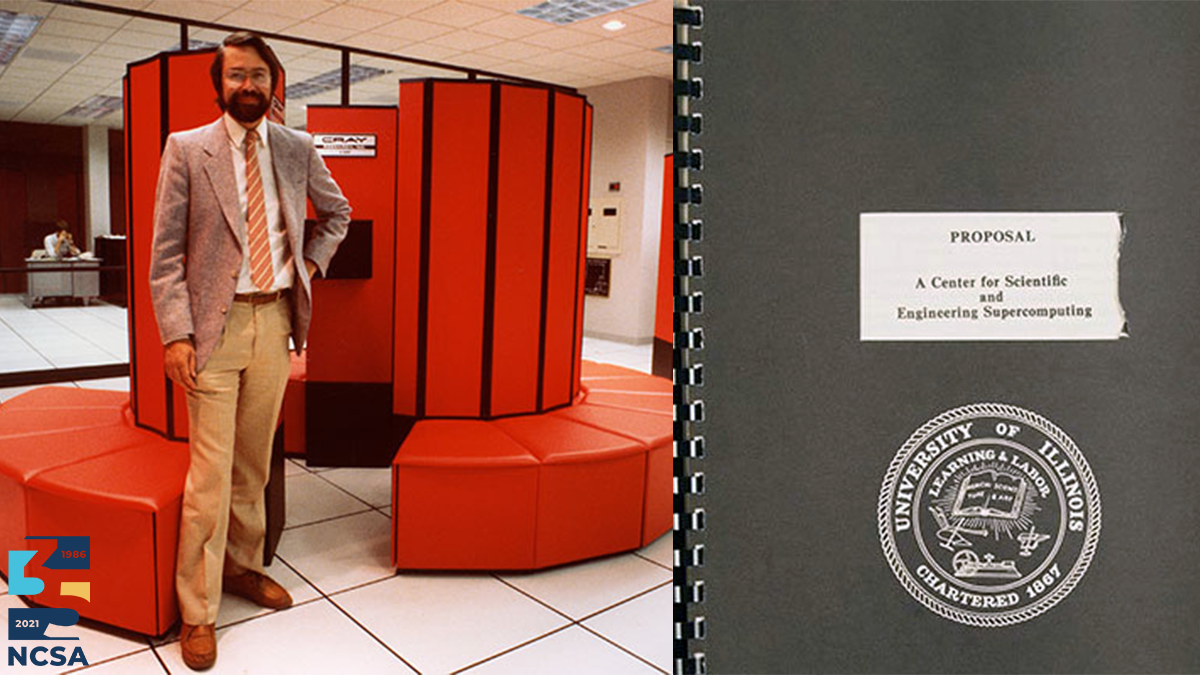
National Center for Supercomputing Applications Opens
Responding to a ‘famine’ of supercomputing power for U.S. researchers, Illinois astrophysicist Larry Smarr and seven Illinois colleagues submitted an unsolicited proposal to the National Science Foundation, asking for funding to launch supercomputing centers. NSF responded in 1985 by establishing the National Center for Supercomputing Applications with Smarr as its first director. NCSA “opened for business” early in 1986.
Help Desk is available from 7 a.m. to 11:30 p.m., seven days a week, 365 days a year.