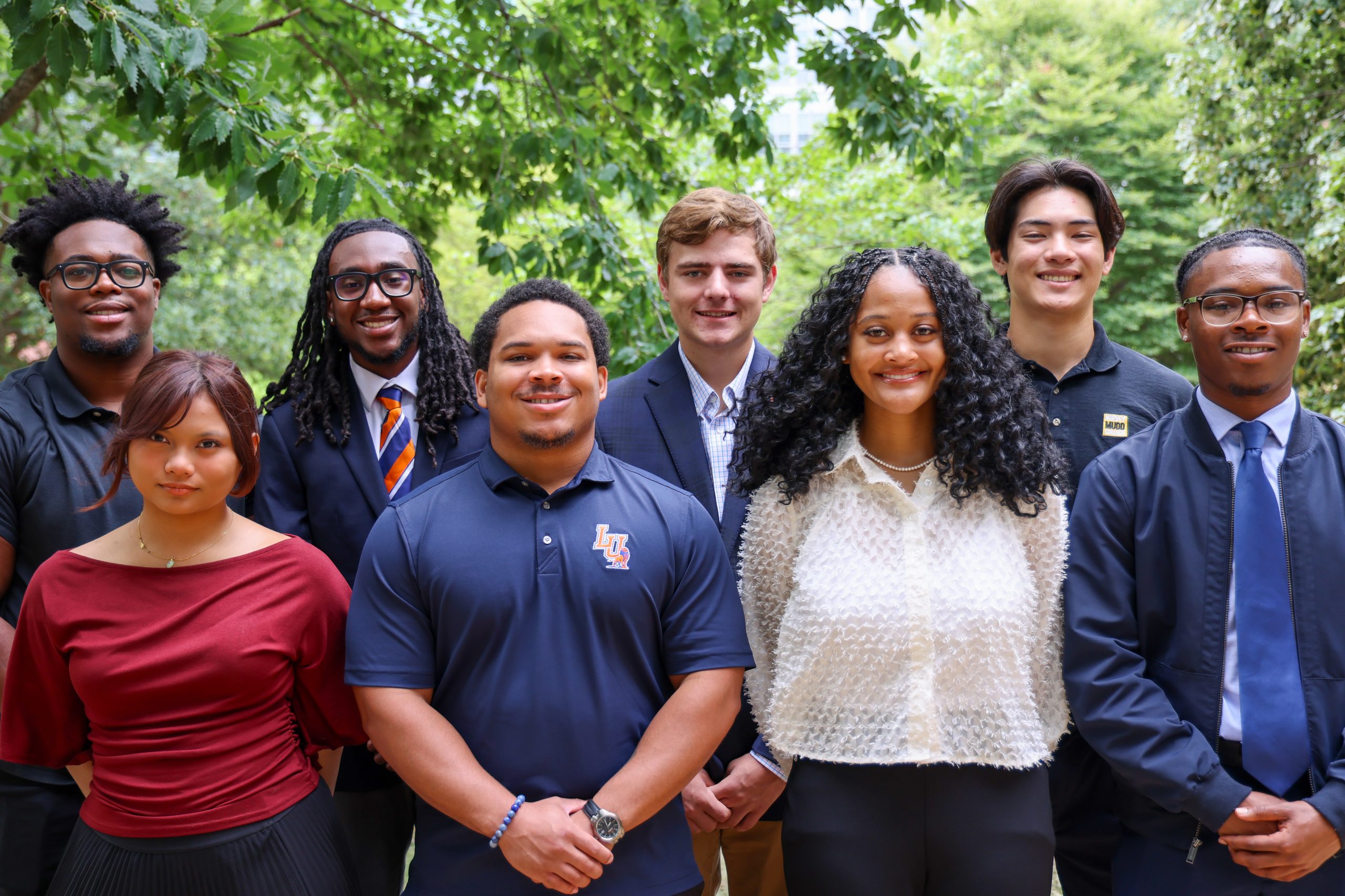
When students show up to the Center for Digital Agriculture (CDA) Research Experience for Undergraduates (REU), they might expect to learn about artificial intelligence, data science or even robotics. While the eight students who make up the 2026 cohort did dive into those subjects – and many more – they also came away with a greater understanding of what it means to work in a collaborative, academic environment where finding solutions prevails above all else.
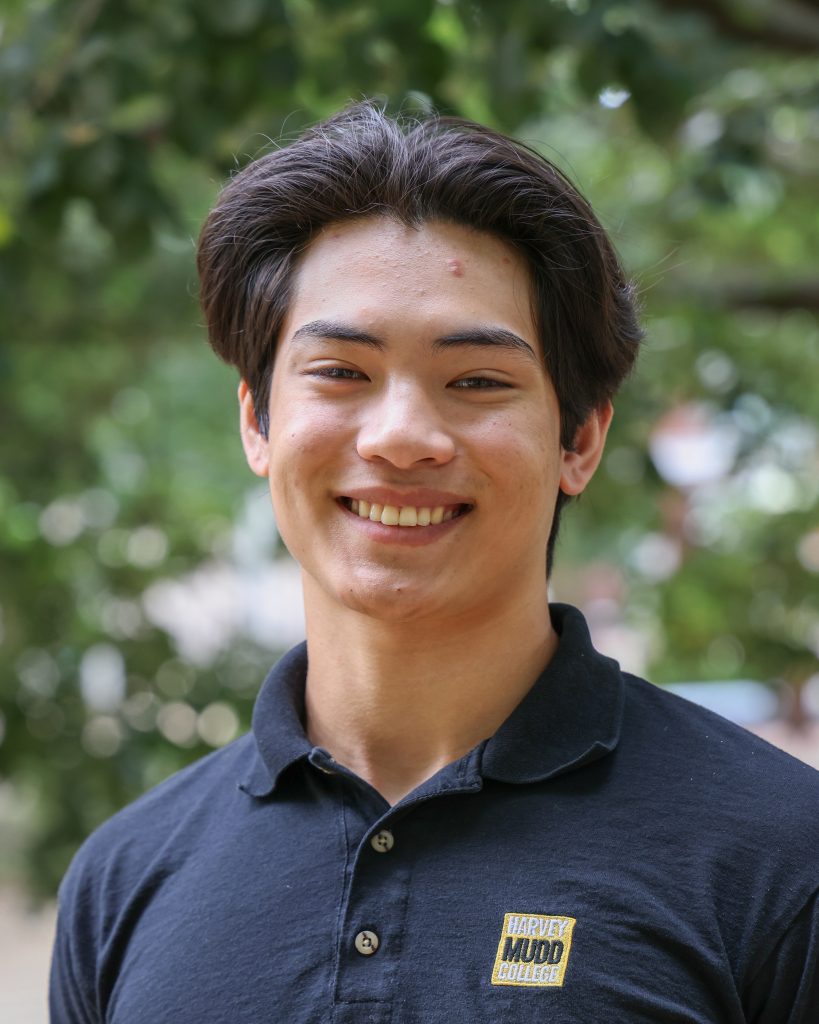
“I learned some really valuable lessons about myself and about working with a team,” said REU participant Yuan Garcia. “There were many times when I got stuck and didn’t consider that there may have been people on the team who had the same exact experience. I want to thank (NCSA AI engineer) Sanyam Jain for all his help as a co-worker; he has always been there, and I couldn’t have done what I did this summer without him. The ability to reach out for help more was really something that this summer helped me with, and I’m very appreciative of it.”
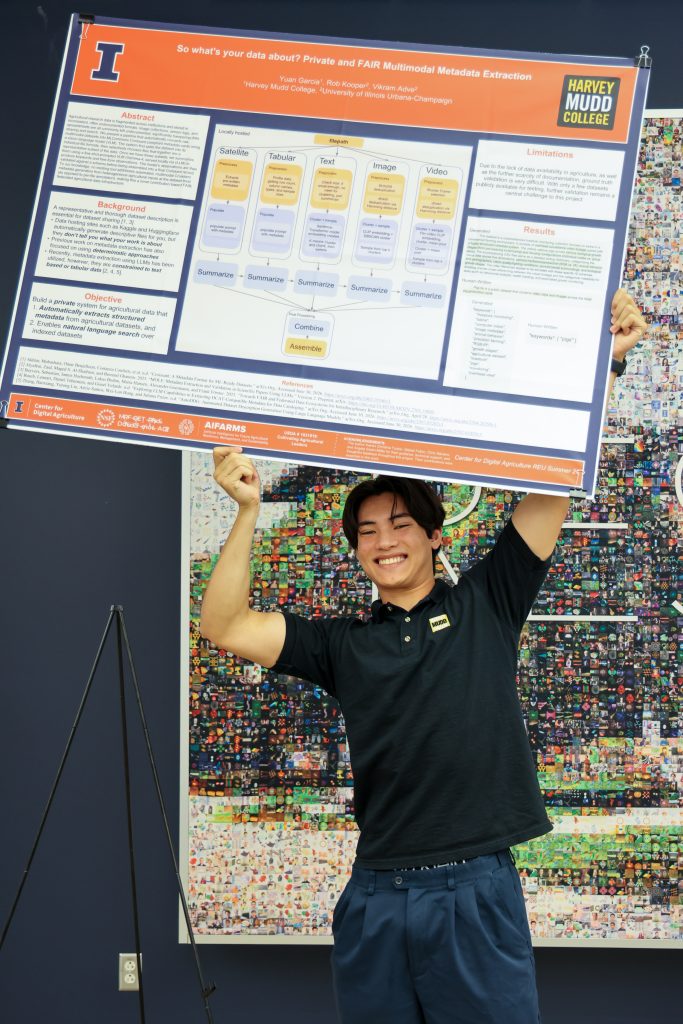
Garcia, a computer science major at Harvey Mudd College in California, spent part of his summer program on the University of Illinois Urbana-Champaign campus working on his project titled “So what’s your data about? Private and FAIR Multimodal Metadata Extractions.” The CDA REU matches each student with a mentor and NCSA Lead Research Programmer Rob Kooper helped steer Garcia through the ups and downs of the 10-week, hands-on training course.
“Rob was amazing; he was always available to chat in his office, and he struck the perfect balance between helpful guidance and letting me explore the space on my own,” Garcia said. “I was presented with a problem they were working on and allowed my own choice in how to architect a solution once I had found my bearings. Rob was there to help me out every time I hit a snag or broke the computer I was SSH’d into (sorry!). He was an amazing mentor, and I’m really glad I had this opportunity.”
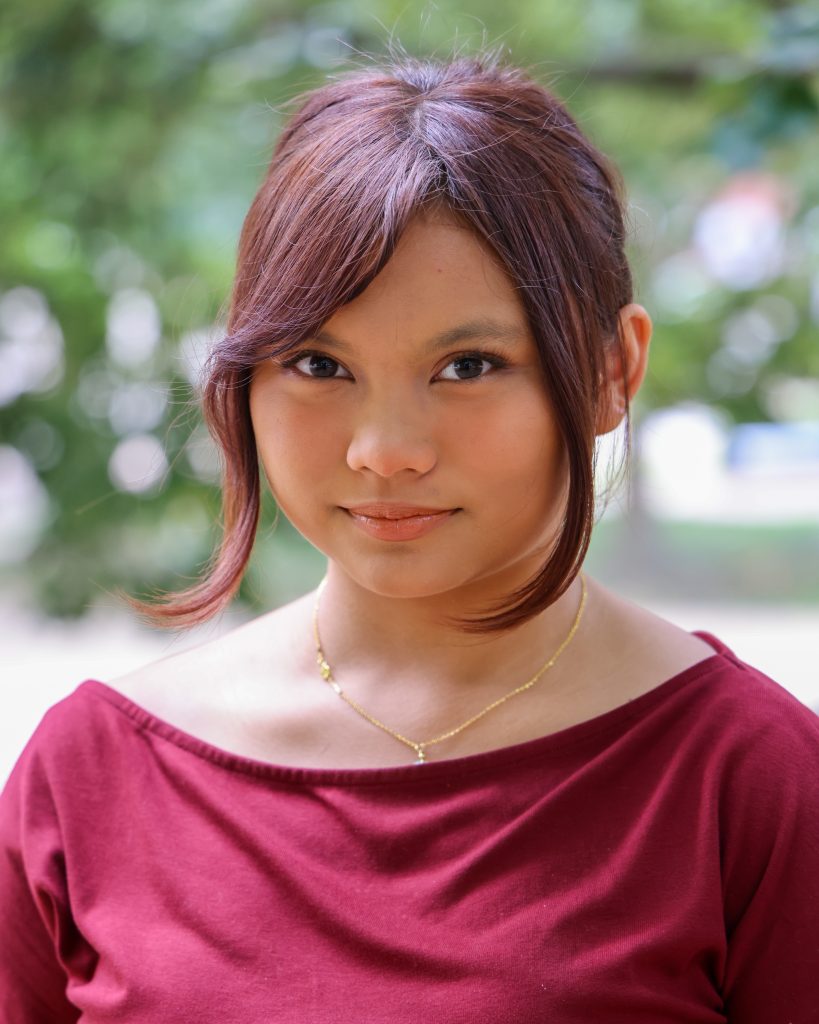
Erika Ebreo, a biological science major at San Jose State University, also experienced significant personal growth during her time on the Illinois campus.
“The CDA REU program encouraged me to be very independent and held me responsible for communicating my progress, while still providing support whenever I needed it,” Ebreo said. “This helped me grow as a researcher by teaching me to take greater responsibility and direction over my own project rather than simply following instructions.
“The program is very beginner-friendly, coming from someone with no prior coding or agricultural experience. I felt extremely comfortable and supported while learning about unfamiliar topics and was always encouraged to ask questions. I was able to not only focus on my own research but also build lasting relationships with my mentors. Even after the program ended, the connections I made have continued to open new opportunities for me.”
CDA Growing Students’ Inspiration
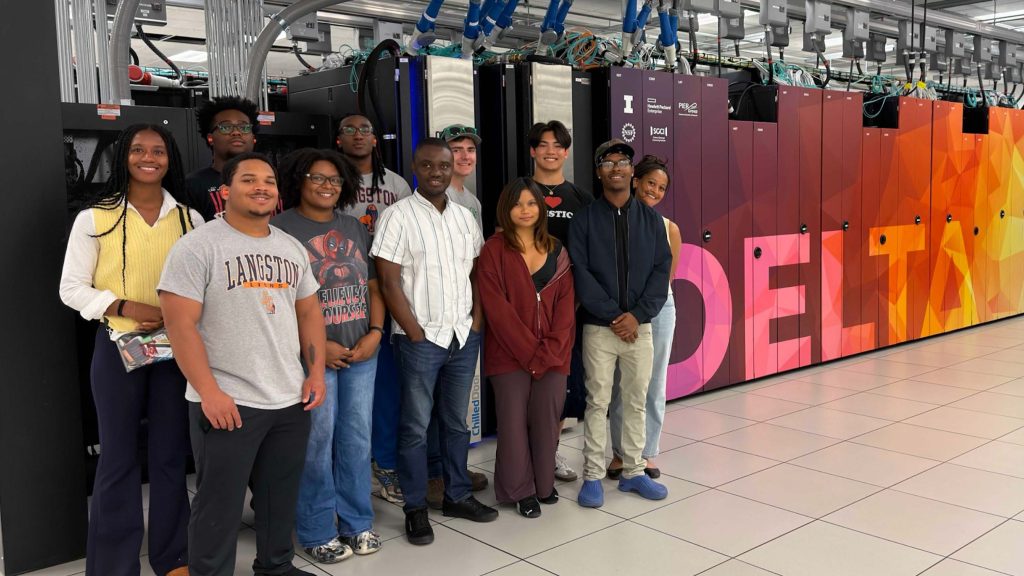
The summer research program introduces undergraduate students from across the country to the rapidly growing field of digital agriculture. The students join interdisciplinary research teams, allowing them to work on real-world projects that integrate agriculture with engineering, computer science, artificial intelligence, robotics, data science, biotechnology, animal science and environmental research. In addition to conducting research, students participate in professional development activities, workshops, field trips and networking opportunities that prepare them for graduate study and careers in academia, industry and government.
The CDA REU program helps build the next generation of leaders in digital agriculture by exposing students to research opportunities they may not have access to at their home institutions. The program recruits students from a wide range of academic backgrounds to foster interdisciplinary collaboration and demonstrate how diverse expertise is needed to address global agricultural challenges.
By developing students’ technical skills, encouraging innovation and inspiring future careers in digital agriculture, the program supports the broader CDA mission of advancing sustainable, productive and technology-driven agricultural systems that can help feed a growing global population while protecting natural resources.
“The CDA REU program has been going strong for six years. With the conclusion of this summer’s program, we have hosted 72 students, providing participants with a unique experience that helps them develop the skills and knowledge needed for successful careers in digital agriculture,” said Christina Tucker, managing director of CDA and REU program coordinator. “Those of us at the Center for Digital Agriculture benefit from the program as well. We gain new perspectives from each group of students while knowing that we are helping to prepare and shape the next generation of the digital agriculture workforce.”
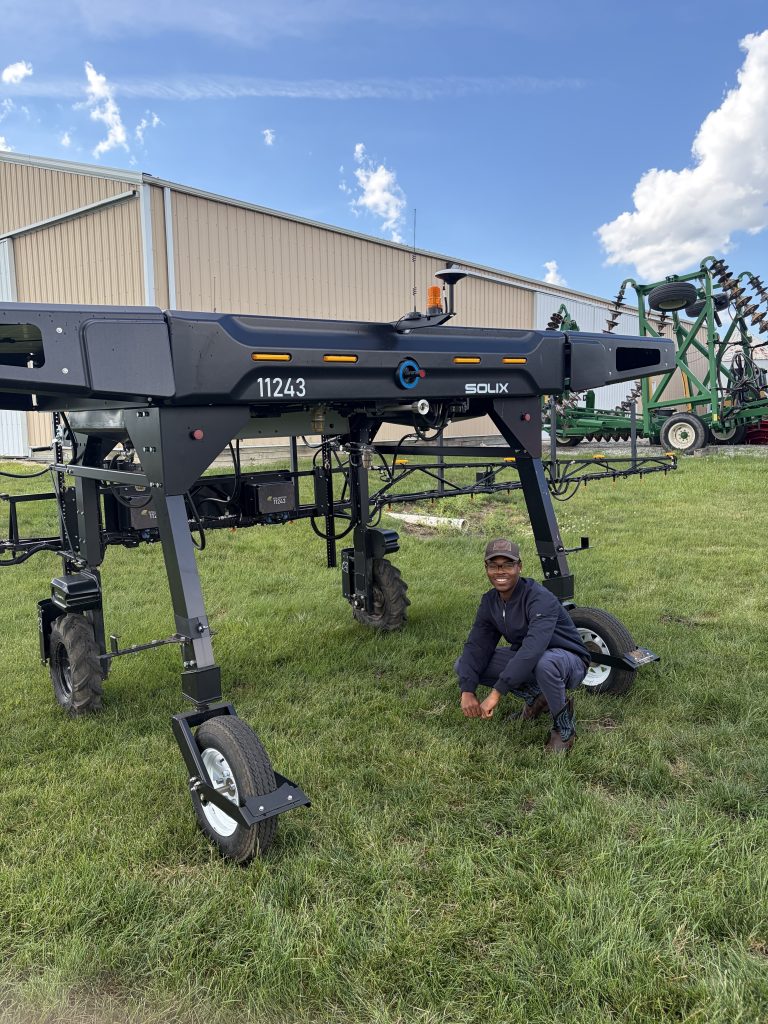
The program was a perfect fit for Southern University and A&M College student Scedric Jackson and his work on “Classification of Red Crown Rot in Soybean Fields Using UAV Imagery” under the mentorship of Dr. Boris Camiletti.
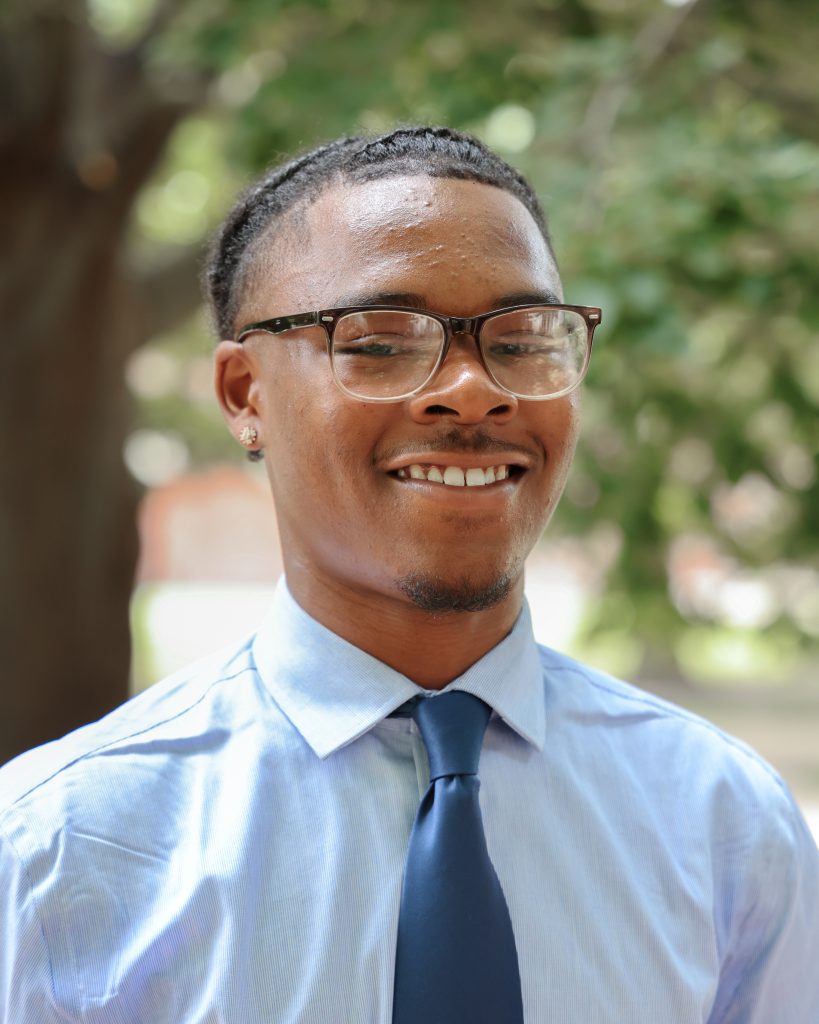
“Throughout the program, I learned how to process UAV imagery, use Python and QGIS, and develop machine learning and deep learning models to identify Red Crown Rot in soybean fields,” Jackson said. “I also had the opportunity to receive feedback, improve my research and present my findings through a research poster and lightning talk. These experiences helped me better understand how technology can be used to solve real agricultural problems.”
The REU opened new possibilities for Jackson’s research.
“One of the things that stood out most to me was learning how artificial intelligence and drone imagery can be used to detect plant diseases. Before this program, I had very little experience with deep learning, convolutional neural networks, or creating disease probability maps from UAV imagery,” Jackson said. “The program also introduced me to areas of agriculture beyond traditional farming, such as digital agriculture, plant pathology, agricultural engineering, and data science.”
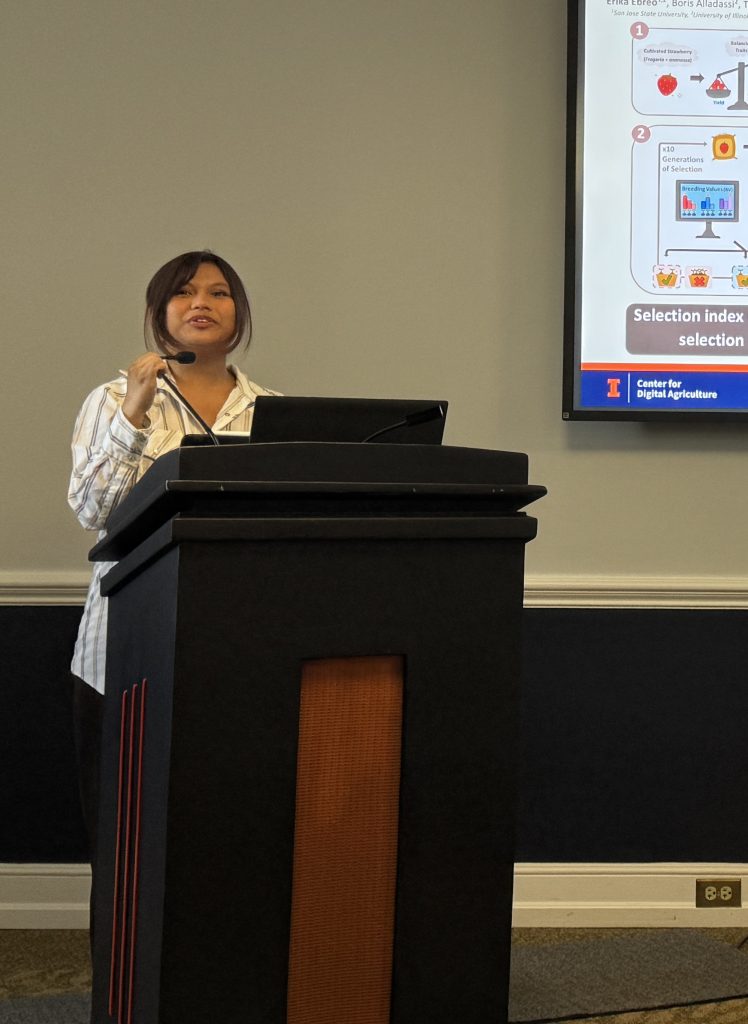
Ebreo, whose REU project focused on “Sweet and More: Balancing Sugar Content and Yield in Strawberry Breeding” with Dr. Alex Lipka, was surprised to find she learned more than just the technical aspects of digital agriculture and research computing.
“I came into the program expecting to learn a bit of coding. However, it turned into an opportunity to discover how transferable skills can be across different fields,” Ebreo said. “It made me appreciate how much you can learn from stepping outside of the research you are already familiar with. I realized that the things we learn don’t have to stay within one field, and combining different skills and perspectives can make us better, more introspective researchers.”
A Worthwhile Way to Spend a Summer
After all these years of students enjoying the summer experience with CDA, recommendations are still coming in strong.
“I would recommend this opportunity to future students because it provides hands-on research experience, professional mentorship and exposure to new technologies and career paths,” Jackson said. “As a student from Baton Rouge, Louisiana, I was introduced to agricultural research and technology that I had not previously encountered in my community. Traveling to Illinois and working in a different environment expanded my perspective and showed me how broad the agriculture field truly is.
“This experience helped me grow academically, professionally and personally, while also increasing my confidence in my ability to contribute to research. I believe this opportunity would be especially valuable for students from communities like mine because it can expose them to possibilities they may not have known existed and inspire them to pursue careers in agriculture, technology and research.”
Garcia shares that sentiment.
“I would highly recommend this to other students for a multitude of reasons, one being that it’ll give you access to some of the best research minds the world has to offer,” Garcia said. “You will learn just from being in their company and chatting with them so much more than you could learn from a textbook. There are so many small mindset changes and workflow adjustments that I’ve made thanks to the mentorship of Sanyam, Rob and Vikram (Adve) that have impacted how I’m going to move forward as both a researcher and a forever student!”
Applications for the 2027 cohort will open in November. Any students interested in applying to the program can join the mailing list to be notified when the application opens.
This program is supported by U.S. National Science Foundation proposal #2244580 REU Site: Drivers for Machine Learning and Artificial Intelligence Practices (MAPs), the Center for Digital Agriculture, USDA NIFA Grant # 2020-67021-32799 Artificial Intelligence for Future Agricultural Resilience, Management and Sustainability (AIFARMS), and USDA NIFA Grant # 2024-38821-42057: Establishing Foundations for AI-Driven Innovation in Sustainable Dairy Farming.
ABOUT CENTER FOR DIGITAL AGRICULTURE
The Center for Digital Agriculture (CDA) draws on Illinois’ historic land-grant pillars of agriculture and engineering to shape the future of the agriculture industry. The center brings together researchers, educators, industry and agricultural producers to transform how we feed and support a growing global population through innovative approaches. CDA also boasts a Master of Engineering in Digital Agriculture and six certificate programs that address the profound workforce shortage in this field by providing graduates and working professionals with in-depth knowledge and technical skills. CDA is a multidisciplinary effort at the University of Illinois Urbana-Champaign between the Grainger College of Engineering, the College of Agricultural, Consumer and Environmental Sciences and the National Center for Supercomputing Applications. CDA also leads the Artificial Intelligence for Future Agricultural Resilience, Management, and Sustainability (AIFARMS) Institute which is supported by the USDA National Institute of Food and Agriculture and the National Science Foundation. CDA also leads the U. of I. sub-award for the Center for Research on Programmable Plant Systems (CROPPS), which is supported by the U.S. National Science Foundation.