Researchers at the National Center for Supercomputing Applications (NCSA) hosted an innovative workshop series to make high-performance computing (HPC) education more accessible for practitioners with disabilities and the broader research community.
Led by Omar Khan, a graduate research assistant at NCSA, and JooYoung Seo, an assistant professor at the School of Information Sciences at the University of Illinois Urbana-Champaign and NCSA faculty affiliate, the workshop emerged from a recognized gap in accessible educational resources for HPC systems. While prior efforts have explored how learners conceptualize HPC environments, there has been limited work examining how to make HPC education accessible.
Khan and Seo sought to learn how disabled researchers work with HPC systems and expand access to research computing through education and support.
“As researchers with disabilities ourselves who regularly use HPC resources, we wanted to understand how other practitioners leverage these resources – if at all – and what we can offer in education and support to ensure open access,” Khan said. “These are systems that hold tremendous power in expediting large-scale task completion across multi-disciplinary domains, and therefore, multi-disciplinary researchers. To that end, we felt that such resources should not be limited to those with certain abilities or ability levels.”
The workshops emphasize that there is no one-size-fits-all approach to working with HPC systems. Khan and Seo included different teaching practices in the workshops, including reading terminal commands character by character to reflect the actual interaction flow of screen-reader users with HPC systems, and emphasizing multimodal interaction with the terminal and text editor to prompt ideas for a personalized user experience.
“It’s a curriculum built by, with, and for practitioners with disabilities and beyond, demonstrating that learning HPC concepts, like any other computing concept, can and should be taught in a multitude of ways to support learners with different abilities,” Khan said.
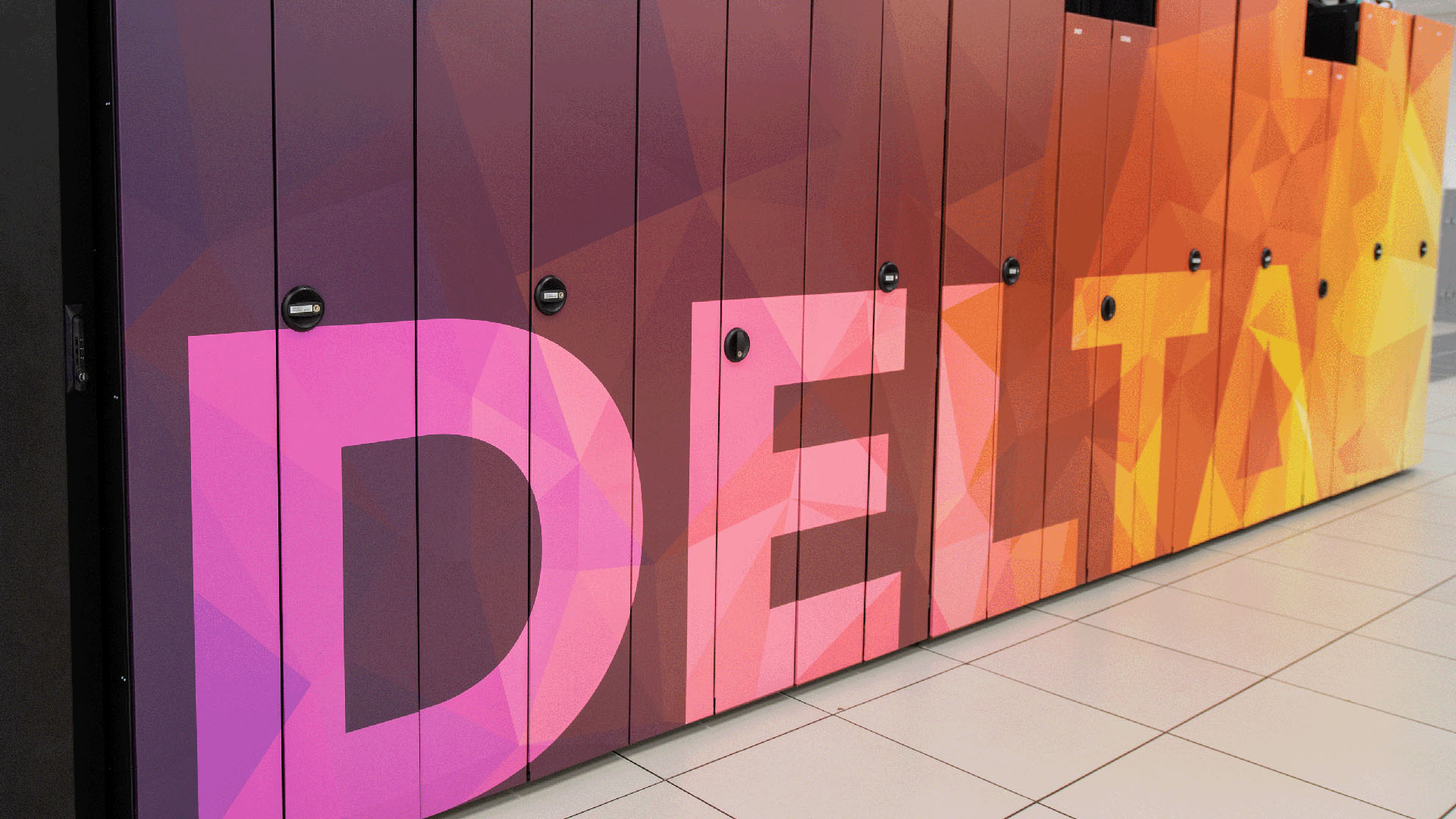
Sponsored by the NCSA Delta project – a U.S. National Science Foundation-funded resource charged with making computing more accessible – the workshop series was also created to raise broader awareness of the different educational opportunities for HPC systems. A variety of perspectives can strengthen collaboration and boost innovation, especially within NCSA’s multidisciplinary initiatives, because researchers can bring unique approaches to the work.
By understanding how researchers and practitioners with different abilities interact with HPC systems, the broader HPC community can develop more sophisticated and open strategies for improving accessibility across the field.
“Each of us brings our own unique backgrounds to any project we work on, and recognizing this variety of perspectives is critical to the most impactful collaboration,” Khan said.
The workshop series received a positive response from its audience and will have a significant impact on the future of accessible research computing.
“We’ve received a positive reception to our workshop series with both disabled and non-disabled learners being excited to have accessible learning materials and to learn how each group can communicate their understanding more effectively with the other,” Khan said. “We are especially thankful for our participants’ feedback as we look to improve this workshop series for future offerings.”
The workshop recordings are available to the public. Watch here!
ABOUT DELTA AND DELTAAI
NCSA’s Delta and DeltaAI are part of the national cyberinfrastructure ecosystem through the U.S. National Science FoundationACCESS program. Delta (OAC 2005572) is a powerful computing and data-analysis resource combining next-generation processor architectures and NVIDIA graphics processors with forward-looking user interfaces and file systems. The Delta project partners with the Science Gateways Community Institute to empower broad communities of researchers to easily access Delta and with the University of Illinois Division of Disability Resources & Educational Services and the School of Information Sciences to explore and reduce barriers to access. DeltaAI (OAC 2320345) maximizes the output of artificial intelligence and machine learning (AI/ML) research. Tripling NCSA’s AI-focused computing capacity and greatly expanding the capacity available within ACCESS, DeltaAI enables researchers to address the world’s most challenging problems by accelerating complex AI/ML and high-performance computing applications running terabytes of data. Additional funding for DeltaAI comes from the State of Illinois.